17 October 2011

Tour War-Torn Europe by Tramp Steamer: Review of Dark Voyage

My rating: 4 of 5 stars

I generally enjoy the heck out of Alan Furst's novels. The atmosphere he creates is very immersive, and even when the main character is a bit inscrutable, supporting characters can just send your brain spinning off into the possibilities of their backgrounds and futures.

This volume is one of the most disjointed of Furst's novels I've read. The narrative can jump several days, then backtracking as our PoV character thinks back to how they survived the last cliffhanger. The role of S. Kolb feels a bit like a red-herring, never truly panning out. The ship-board setting feels a bit thinner than wartime Paris common in other volumes.

For all those complaints, I still recommend the book. It was a fun read and a nice break between denser fare.

Labels: , , ,

26 September 2011

Can Bomber Command Get Any Respect? Review of Bomber Boys

My rating: 3 of 5 stars

Sometimes it is amazing to see the differences between how different people (or peoples) see the same events. Like his earlier book Fighter Boys Patrick Bishop tells Bomber Boys from a British perspective and for a British audience. However, I was well aware of the great stories and mythos of Fighter Command and the Battle of Britain. That quintessentially British story had been transported across the pond with only changes to vocabulary.

I didn't even realize how unfamiliar I was with the story of RAF Bomber Command. I had assumed that the RAF's strategic bombing campaign was held in the same generally high esteem in the UK as the strategic efforts of the Eighth Air Force are held in the US. Apparently, this was a very false assumption.

While the public in the US debated the efficacy and ethics of dropping the atomic bombs on Hiroshima and Nagasaki, the British public debated (or ignored) the ethics and efficacy of the entire area-bombing effort against Germany.

I don't think this is the book to truly explore these issues. It is a history of the people who flew the planes, not an operational history or philosophical treatise. Bishop assumes the audience has been following these discussions and avoids making a ruling on either ethics or ultimate cost/benefit analysis.

The ultimate difference in how the US and the UK welcomed their Bomber Boys home rests on the fact that the British had suffered under a bombardment of their own. People don't like being bombed, ergo people who have been bombed, don't like bombers.

I think I just added another month or so until I can face the volume on my shelf addressing the campaign from the German pespective.


Labels: , ,

20 September 2011

Blimps Over Blighty: Review of British Airships 1905-30

British Airships 1905-30 (New Vanguard)British Airships 1905-30 by Ian Castle

My rating: 3 of 5 stars

This was a deal book I found prowling through the local Borders that was in its final death throws. I thuink I have found that I like the Osprey Publishing books and may breakdown and buy more in the future. They seems a little "lite" and are therefore more likely to get you a querolous look from a guest who sees it on your bookshelf than the latest Ian Kershaw.

I enjoyed the coverage of all the military airship models, complete with contemporay photos and color plates of most classes. It was only mildly dissapointing not to something more deep-steampunk.

So many people have tried to populate a world with airships, blaming the Hindenberg for destroying such an elegant way of flying. But reading about the crash of the R101 reminded me that Hindenburg was just the last of the air behemoths to die a fiery death, not the only one.

View all my reviews

Labels: , , ,

27 July 2011

When the Pulp Age Meets the Stone Age: Review of Lost in Shangri-La

Lost in Shangri-La: A True Story of Survival, Adventure, and the Most Incredible Rescue Mission of World War IILost in Shangri-La: A True Story of Survival, Adventure, and the Most Incredible Rescue Mission of World War II by Mitchell Zuckoff

My rating: 3 of 5 stars

More unbelievable stories from WWII.

Upon reading the subtitle, I thought "Most Incredible Rescue Mission"? Those are fighting words, especially if you have read Ghost Soldiers: The Epic Account of World War II's Greatest Rescue Mission. But that book's author, Hampton Sides was willing to write a blurb for the back cover. The difference between these two missions does focus on the "incredible" aspect. The Alamo Scouts' rescue mission in the Phillipines was amazingly well executed and very lucky. The accident and airlift from Shagri-La in New Guniea was a matter of "really, who writes this stuff?"

So well before Gilligan's Island every aired, the Army Air Corps ran a "three-hour tour" sight-seeing flight over an isolated stone-age valley deep in the mountains. This wasn't the first fly-by, but this flight was mainly a morale-builder for WACs based in Hollandia. Mistake number one? Picking a plane called the 'Gremlin Special' - really!

After the inevitable crash, we have a set-up from a bad Edgar Rice Burroughs pulp novel. Two men and one woman trapped in a land time forgot - with cannibals! The survivors even knew the tropes and joked about having to swing on vines to cross streams and debating which of the men would inevitably have to marry Maggie the WAC once they were rescued.

Oh, no, that's not good enough. We have to meet the young-go-getting officer of the rescue party, an Anglo officer of a unit of Fillino-American guerilla-trained paratroopers. He aso has MAJOR daddy-issues as his father is stayed in the Phillipines to run a partisan movement and has asked the Army brass to bench his son's unit since his son can't possibly measure up. Serious guy-shit!

And the rescue? Gathering a rag-tag band of experts and equipment from across the Pacific to try and land a glider and then snatch it back into the air. All this while reporters circle the valley conducting interviews by radio and a former actor/jewel thief/sailor parachutes in (drunk) to catch the whole thing on film for the propaganda value.

OK, so this is all very American pulpy. But this is not the real strength of the book. Mitchell Zuckoff has travelled to Shangri-La to interview the locals who remember the crash and rescue effort. Seeing the whole first-contact aspects through the locals eyes really does help show how strong the pulp-stories were in the minds of the Americans and colored everything they saw around them.

View all my reviews

Labels: , , ,

21 June 2011

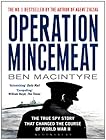
When Truth is Pulpier Than Fiction: Operation Mincemeat

Operation MincemeatOperation Mincemeat by Ben MacIntyre

My rating: 4 of 5 stars

All throughout this book I kept thinking "where do they find these people!" At times WWII feels like it was a play populated with the most absurd, and yet stock, characters from all the bad pulp stories. Of course our British Intelligence hero is jewish - ah, but not just jewish, a second son from a prominent banking family - the Montagus! And don't forget that his younger brother renounces the family fortune to pursue his twin loves for communism and ping-pong (with his wife - nicknamed Hell).

But wait, that's not British enough, we need a real stiff-upper-lip type - we'll call him Charles Chemondeley and make sure he has one of thos crazy handle-bar moustaces. He'll be Montagu's partner. And hey, didn't Ian Fleming work from British Intelligence in the war? Lets bring him in too - oh heck, bring in every hack spy novelist you can find!

Ooh! And make the Nazi spy master in Spain be "cadaverous" and his boss in Madrid is secretly 1/4 jewish and so feeding bad intel to Berlin to pump-up his reputation to avoid the concentration camps. And we need a Good German too! The intelligence analyst in Berlin! We'll make him be an anti-Hitler conspirator who is lying about Allied troop levels to try and get German to lose faster!

Any thing else? Yeah, the sub that delivers the body, it isn't just some random sub. It also smugged Gen, Mark Clark into Algeria, smuggled a French general out of France (while pretending to be an American sub) and gets to be a pathfinder/beacon for the actual Husky invasion forces!

If this was a novel, any reviewer worth their salt would go nuts at the stereotypes and coincidences. And just think, this is the more heavily researched, less censored and propagandized version!


View all my reviews

Labels: ,

06 September 2010

Fascism in America - the View from 1930s Vermont: Review of "It Can'y Happen Here"

It Can't Happen HereIt Can't Happen Here by Sinclair Lewis

My rating: 3 of 5 stars

In the 1930s, the world was becoming increasingly dominated by totalitarian states, and these were not just the banana republics that we have grown accustomed to seeing in Africa, Latin America or the Middle East. Totalitarianism, whether in the form of fascism or communism, seemed to have a monopoly on new thinking and revolution. It was far from unthinkable that this was the new way of the world.

It was into this world thatSinclair Lewis injected It Can't Happen Here. The fictional rise of Berzelius "Buzz" Windrip is rapid and shocking, showing just how fragile America's constitutional balance of power is. I found that rise to be a bit precipitous (vs. similar fictional American fascist movements laid out in The Plot Against America or The Center Cannot Hold and [The Victorious Opposition]. Sinclair is a better author than either Roth or Turtledove, but the later books take things slower. Those feel more plausible, but Sinclair's history is amazingly possible.

Another place where Sinclair seems to skip a cylinder is in the brutality of the Windrip Corpo regime. The repression is brutal and torture is always awful, but Sinclair did not have a conception of the mechanized murder and evil that was to come in the Holocaust. Turtledove does not flinch from a proposed Confederate Holocaust and the threat of the Holocaust is ever-present in Roth's book. But I can in no way blame Lewis for failing to foresee the twists that the mind of Adolf Hitler would take (even if Japanese behavior in Nanking and other Chinese cities had given a taste of what was to come).

And don't rest on your laurels America, thinking that the age of totalitarianism is past and so is the threat that Lewis wrote of. I worry about the claims made by an imperial presidency, regardless of party. Always question those who have all the answers.

View all my reviews

Labels: , ,

23 July 2010

Defenders of the Air: Review of "Fighter Boys"

Fighter Boys: The Battle of Britain, 1940Fighter Boys: The Battle of Britain, 1940 by Patrick Bishop

My rating: 4 of 5 stars


Ah, the Brits.

Normally, while I'm reading a book, I find myself pulled to a theme in my thoughts. For some reason, this book didn't get me on a single thought, so please excuse my disordered ramblings.

It is always amazing to me how very different the American and British views of the same events can be. This book is so much broader and yet seems much more genuine that Kershaw's The Few. I know Kershaw was focusing on a much smaller selection of pilots - the dozen or so Americans to participate in the Battle of Britain - but when his story is slotted in next to Bishop's broader (and yet shorter) history, it just feels pale in comparison.

The other part of reading a British author is the differing and increased vocabulary. The interviewed pilots casually mention "debagging" their squadron lead - I had just come across the term "debag" in Reading the OED where the (American) author had been surprised that the term and practice (better know in the Colonies as pantsing) was still in use in the early 20th century. It was only near the end of the book that a discovered that one pilot's constant "lurcher" companion was a dog, not his batman as I had thought (bad enough that I knew what a batman does - not chase criminals in Gotham City).

Finally, I must say it was a it disorienting to be reading about the Battle of Britain at the same time as reading The Hobbit to my daughter. To have the heroic Bard the bowman leading the archers of Laketown in a desperate rushed (and ultimately triumphant) defense against the depredations of the fire-breathing Smaug just seemed to echo the RAF too well. And remember, Tolkien published The Hobbit only two years after the Luftwaffe was even established.


View all my reviews >>

Labels: , ,

16 May 2010

Adventures of a Female PI in 1940 SanFran: Review of City of Dragons

City of Dragons City of Dragons by Kelli Stanley

My rating: 4 of 5 stars

I'm a sucker for pulp sometimes.

Miranda Corbie, PI in 1940 San Francisco, a detective in the mold of Sam Spade, but trading on her face, her legs, and her knowledge of the club and escort scene to handle divorce cases. She's a former escort, former Spanish Civil War nurse, and owes a lot to connections to burlesque dancer Sally Rand.

Most importantly in my mind, she's nobody's damsel in distress. Miranda is a self-destructive, hard-drinking, chain-smoking, emotionally isolated heroine. But she is very adamant that these are her choices, and any of the (several) romantic interests in the book will have to accept that. She will not be rescued, from her own choices, or the mechanations of mob bosses, smugglers, murderers or thieves. I couldn't help but to compare this PI to Janet Evanovich's bounty hunter, Stephanie Plum, who bounces between paramours to rescue her.

There's also a point to be made in how a female PI sees people and information where police homicide detectives see only window-dressing and cardboard cut-outs. I'm still not sure where the title came from and I wish the publisher had found a 1940 picture of Chinatown for the cover instead of an obvious '50's shot. What can you do?

View all my reviews >>

Labels: ,

20 April 2010

Birth of Middle-Earth in the Fields of France: Review of Tolkien and the Great War

Tolkien and the Great War: The Threshold of Middle-earth Tolkien and the Great War: The Threshold of Middle-earth by John Garth


My rating: 3 of 5 stars
This book was something quite different from what I expected. Going in I expected a book focused on J.R.R. Tolkien almost exclusively, with discussions of the hells of the Western Front in WWI and then a deeper discussion of the themes of loss or nature and industrialization play out in The Lord of the Rings. I was looking forward to that analysis of the 'coming of the machine age' that Peter Jackson had played up so beautifully in the movie version of The Two Towers.

Instead, Garth treats us to a view into a group of Victorian friends with discursions on the philological and poetic world/myth building that Tolkien was working on at the time. The group of friends are the four self-appointed members of the 'Tea Club and Barrovian Society" (shortened to TCBS for most purposes). The grand name concealed what was no more than a high-school clique. I'm reminded of my own high-school poseur-gang dubbed "the D-Men" although in practice, the TCBS was closer to Tufts University's Film Series club.

Each of the four members of the TCBS saw themselves and the group as having the potential to change the world and bring forth works of immortal quality. Garth asserts that the TCBS was purely middle-class, but there is a strong strain of upper-class Victorian exceptionalism in Tolkien's peers views of their world. After being split apart to attend Cambridge and Oxford, the four friends still exchanged letters, poems, writings, and music and periodically met in what were referred to as ‘Councils.’

It’s all very idyllic and the reader can’t quite say whether these young men were destined to be the next Algonquin Round Table or just a group of high-school alumni pen-pals. And then Tolkien’s generation of young academics was swept-up in the Great War. Three of the four TCBS members were young officers leading patrols and assaults in the Battle of the Somme, the fourth was on a battlecruiser in the Battle of Jutland. Only one of the three sent to France came back. Tolkien was infected with lice-borne “trench-fever” and spent second half of the war on home guard duty and medical convalescence.

Garth makes a good argument for the power of Tolkien’s experience in the Somme for shaping much of his mythic background for Middle-Earth, particularly the stories that went into his Book of Lost Tales and The Silmarillion. I was pleasantly surprised to learn of the conceptual links between Tolkien’s mythology and books of H. Rider Haggard.

In the long Postscript, Garth makes an effort to place the writings of Tolkien in a literary universe defined by post-Great War writing. He makes a case that Tolkien was writing about his wartime experience without falling into the two major camps of war-writing of the period. Tales of Middle-Earth are neither the ‘high diction’ propaganda created by imperial powers in the image of Haggard and [William Morris} to impress their people and drive in recruits nor the studied, modernist, or gritty writings of Robert Graves or Sigfried Sassoon. Instead, Tolkien sought to create a new style. In the process, he created a whole new genre of popular literature.

View all my reviews >>

Labels: , ,

09 April 2010

Jewsh Fighters of the Belorussian Forests: Review of Defiance

Defiance: The Bielski Partisans Defiance: The Bielski Partisans by Nechama Tec


My rating: 3 of 5 stars
Once again, I'm back with the Polish partisans in WWII. I swear, I have no ulterior motive, I've just been getting pulled back to these same people and lands for the past few years, I'm not sure why.

Then again, maybe this book doesn't count. It depends on who you ask if the land is eastern Poland or western Belorussian (now Belarus, in between part of the Soviet Union). It depends on who you ask what the nationality of the Bielskis was - Polish Jews, Belorussian Jews, Russian partisans, Soviet guerrillas, just Jews?

The story of Tuvia Bielski and his band is harrowing. What else can you expect of a place invaded three times in five years? A place where the choice of language for greeting a stranger could mean the difference between a free meal and a shoot-out? (Incidentally, those language options include Belorussian, Russian, German, Polish, Yiddish, Hebrew, Ukrainian, and Lithuanian).

Part of me was expecting more adventure tales of brave raids and crazy stunts, like a history of the SAS - but Tuvia and company didn't have the luxury of bravery. Instead, the Bielski brothers kept a sanctuary for any and all Jews with just enough violence to keep everyone fed and Soviet authorities off their backs.

The other part of me wanted a primer on building a Robin Hood citadel in the forest. In this I was also denied, but educated on how being mobile in a crisis and preserving people over things or places should be the true priority.

You'll have to excuse me now. I really should be checking the contents of the family's bug-out bags.

View all my reviews >>

Labels: , , , ,

28 February 2010

Winning the Peace with Hershey's Bars: Review of The Candy Bombers

The Candy Bombers The Candy Bombers by Andrei Cherny


My rating: 3 of 5 stars
OK, so I know this isn't technically a WWII book. But I am counting it anyway.

I enjoyed this history quite a bit. I have a few complaints though. First, I'm a bit annoyed at how relentlessly American the sources are. With the exception of sources from West Berliners themselves, this book focuses almost exclusively on the American perspective on the Airlift. Since it was published 60 years after the events it describes, the author had a good 17 years after the fall of the Soviet Union to interview people and access archives to get into what the Russians were really thinking.

I understand that an author has to choose his point-of-view and focus, but I feel like the book could have been written 10 or 20 years after the fact just as well. It's a missed opportunity (especially since Putin has closed so many of the former Soviet archives).

My second complaint is more with the facts than the author. There was one scene where General Clay, commander of all American forces in Germany is about to take off from Templehof Airport, just after Lt. Gail Halvorsen has made his first (against regulations) candy drop. I found myself saying "No! It can't have worked like that!" as the book described Clay seeing the German children waving their handkerchief parachutes at the plane. If that scene were in an alt-history novel, I'd ding the novel fro absurd coincidence.

Speaking of alt-history, I find this book to be a rebuttal to many of the suppositions in Turtledove's The Man with the Iron Heart. In my review of that book I asked "Why did Nazi Germany accept Allied occupation when so many other countries have fought long guerrilla wars against occupying forces?" No, the German's didn't rise up against the Americans, but in 1948, before the Airlift, it really didn't look like Germany was likely to be an effective democracy let alone a staunch US ally. Lt. Gail Halvorsen and the other men of the Airlift changes that and really won the peace.

View all my reviews >>

Labels: , , ,

27 January 2010

What If It Happened Here - Review of "The Plot Against America"

The Plot Against America (Vintage International) The Plot Against America by Philip Roth


My rating: 3 of 5 stars
I went into this book expecting to dislike it. I'm not certain why. Maybe it was the fact that I remember gushing reviews talking about how Roth had created a 'whole new literary genre'.

The genre exists. It's called alternate history. It sells millions of books.

As alt-history goes, this isn't too bad. The memoir aspect is a little different, but does fit well with the focus on day-to-day life of ordinary people instead of movers-and-shakers. As for alt-history tropes, we h=get the seemingly ever-present Jews (nothing against Judaism, it just that Jews are way over-represented in nearly all alt-history series for reasons that I have yet to ascertain), we have a roughly defined point-of-departure (why did Lindy suddenly decide to run for president?), but a real failing on what Terry Pratchett has termed the 'trousers of time' problem. Basically, Roth gives us two years of alternate history, but then has the world snap back into the same basic shape as before (victory in Europe a little late, RFK still assassinated in the 60's). I don't buy it. Once history comes off the rails of what we have been taught, it cannot be forced back on. Would RFK have run for president if JFK hadn't been killed? Would JFK have been president if his big brother Joe Jr. hadn't died in a B-25 bomber/drone accident? Would the US Air Corps have used the same plan to take out V1 sites if they had 2 extra years of aviation development under Lindy before entering the war? Everything goes all quantum on you.

Outside of the discussion of alt-history tropes, well, I'm not sure if I see what makes Roth so admired. Some scenes were very effective. Many others felt like bad filler. The main character, Philip Roth at age 9 or so, comes off as a self-absorbed little snot.

Maybe I'm not cultured enough to understand.

View all my reviews >>

Labels: , , ,

18 October 2009

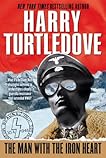
Al-Qaida in Nazi Germany: Review of Man With The Iron Heart

The Man with the Iron Heart The Man with the Iron Heart by Harry Turtledove

My rating: 2 of 5 stars

From Goodreads:
"What if V-E Day didn’t end World War II in Europe? What if, instead, the Allies had to face a potent, even fanatical, postwar Nazi resistance? Such a movement, based in the fabled Alpine Redoubt, was in fact a real threat, ultimately neutralized by Germany’s flagging resources and squabbling officials. But had SS Obergruppenführer Reinhard Heydrich, the notorious Man with the Iron Heart, not been assassinated in 1942, fate might have taken a different turn. We might likely have seen a German guerrilla war launched against the conquerors, presaging by more than half a century the protracted conflict with an unrelenting enemy that now engulfs the United States and its allies in Iraq. How might today’s clash of troops versus terrorists have played out in 1945?"

This not one of Turtledove's better works.

The initial idea is interesting. Why did Nazi Germany accept Allied occupation when so many other countries have fought long guerrilla wars against occupying forces? How is 1946 Germany different than 1979 Afghanistan or 1960s Vietnam? How is it like the former Confederate States in the 1860s?

These are important and valid questions that I feel were swept under the rug. Instead, the narrative seems strongly linked to the US experience in Iraq circa 2006 (before the Sunni Awakening and troop surge). However, if this book is a veiled commentary on Iraq, then Turtledove missed a perfect opportunity to weigh-in on one of the major debates in policy regarding the War on Terror - namely the use of extralegal force (torture, detention without rights, rendition, etc.). The division of post-war Germany into Western Allied and Soviet zones creates a opportunity to contrast the effectiveness of different tactics in counter-insurgency - between a buy 'em off/win hearts and minds plan used by the Americans and unbridled force used by the Russians. In our own history, these are the tactics that those two regimes did use. Instead, Turtledove shows us that the Soviet NKVD is certainly ruthless, but he never even mentions the Marshall Plan (which, in his defense was discussed but not yet implemented within the time-frame of the book.

Instead of answering deep military/historical questions or addressing the policy and moral arguments of the war he is modeling off of, Turtledove instead gives huge benefits of the doubt to the Nazi partisans. Heydrich's organization is presented as monolithic, with no internal power struggles. While their tactics are often taken from the al-Qaida playbook, Heydrich's men also succeed in multiple truck bombings of national monuments (proposed but only rarely completed by al-Qaida) and a dirty bomb attack. Competence at this level is not seen now and was not seen in 1940s Germany (Just read up on the many attempts to assassinate Adolf Hitler to see just how large the logistical and pure luck challenges of such campaigns can be). The most annoying benefit given to Heydrich though is in the surprising backbone given to Republican opposition to Truman's prosecution of the war in Germany. Although Congress does control the purse-strings, and progressives did argue strongly for cutting-off funding for the Iraq War after the 2006 mid-term elections, a successful recall of troops from an overseas war due to Congressional budget-writing never saw a chance of happening. In Turtledove's world it sailed through entirely too easily.

In all, I feel like this book was forced. Ideas were not well thought-out and our heroes were hamstrung by an author who failed to properly research their options.

View all my reviews >>

Labels: , , , , , ,

26 September 2009

The Royal Navy's Home Port: Review of Scapa Flow

Scapa Flow in War and Peace by W.S. Hewison


My rating: 3 of 5 stars
This an abridged version of Hewiston's larger work, This Great Harbour: Scapa Flow. It's a slim little volume of history of the sheltered anchorage in the middle of the Orkney Islands off the northern shore of Scotland.

The body of the book covers the First and Second World Wars when the relatively isolated harbor served as the primary port for Great Britain's main fleet (the Grand Fleet in WWI and the Home Fleet in WWII). The position of Scapa Flow gave the fleet the best staging ground for intercepting any German warships attempting to break out into the Atlantic or shipping attempting to break the British naval blockade applied in both wars.

The book does not cover the various missions and encounters that the Royal Navy engaged in with much detail. Instead, the focus is on activities in the harbor itself. The two most dramatic incidents both involved German warships in the Flow. First, Scapa Flow hosted the German High Seas Fleet when it was interred after the end of WWI. On the summer solstice in 1919, two days before the Versailles Treaty would have ordered the ships of the German fleet distributed to the various victorious allies, the German admiral in charge ordered the whole fleet scuttled.

The next dramatic moment came in the early days of WWII when a German U-Boat penetrated the insufficient defenses of the harbor to sink the British battleship Royal Oak. This incident lead to a major build-up of defenses and forces in the Orkneys, and listing these defenses and emplacements is where this little volume shows its greatest value.

Hewison assumes that his reader already knows a fair deal about the two world wars, the Royal Navy, and the general geography of Great Britain and the Orkneys. The strength of the volume is in the details and the point of view of a native Orkadian.

View all my reviews >>

Labels: , , ,

19 September 2009

Surviving the Purges: Review of "Dark Star"

Dark StarDark Star by Alan Furst

My rating:
3 of 5 stars

I am beginning to become a serious fan of Furst's work. Dark Star is definitely a darker work than the last Furst I read The Polish Officer, and that really is saying something. I'm really not sure how accurately Furst portrays the thinking of a Soviet citizen living through Stalin's purges, but it is certainly believable. Furst proposes several theories for the purges as his main character, Andre Szara, tries to navigate the pitfalls of pre-war Europe. I wish I could measure the believability of these theories that Furst puts in the mouths of his characters. Unfortunately, when I tried to read the the seminal history of the Purges, Robert Conquest's The Great Terror, I just couldn't drag myself through it.

The most interesting contrast in the book was between the terror regimes of Nazi Germany and Stalinist Russia. In both countries, a knock on the door in the middle of the night usually meant a visit from the secret police and the disappearance of at least one family member, usually forever. However, in Germany, you had a pretty good idea of why you being arrested and on whose authority that arrest was happening. In Russia, the Terror was much less predictable. The state apparatus turned on minorities, dissidents, rivals, and even itself. Sometimes it seems clear that Stalin was targeting those he felt were a threat to him; at other times he seemed to be terrorizing the whole country into submission. Furst surmises that some portions of the purge were factional infighting within the government, with no clear hand from above.

All of this is buffered in the book by having Szara, spend most of his time in Paris, Berlin, or Poland, working as a semi-reluctant spy-master for the
NKVD under the cover of his previous life as a journalist from Pravda. This plethora of settings hurts the pacing a bit. Dark Star is over twice as long as The Polish Officer, and it certainly felt it. Still, this novel felt a bit more solid than the very impressionistic and almost ethereal detachment of The Polish Officer. View all my reviews >>

Labels: , , , ,

29 August 2009

Pulp Lives On: Review of Havana Nocturne

I'm a fan of Pulp. Not hugely the original Pulp stories, but of the larger genre and time period.

So when is the Pulp Era?

Some folks have it pegged to the Roaring Twenties with Prohibition, gangsters, barnstorming pilots, and Lovecraftian horrors. I'm more of a fan of the 1930s, with nefarious Nazis, flying boats, and a touch of desperation.

However, I was pretty sure when the Pulp Era ended, August 6, 1945. In one moment, the world of super-science became very real, the mysteries of magic were surpassed, something of the raw adventure of the world passed away.

Except it didn't.

T.J. English makes a very good case for the survival of Pulp in the streets of 1950s Havana. Fabulous show-girls, mobsters, corrupt politicians, partisans in the hills, con-men...it's all still there, without the freeze of the Cold War insinuating itself. The place feels like it would've been a perfect setting for a 'two-fisted' adventurer to continue his adventuring ways after a stint with the OSS.

Labels: , , ,

09 August 2009

More Heroic Poles: Review of The Polish Officer

The Polish Officer The Polish Officer by Alan Furst


My rating: 4 of 5 stars
I had read one Furst novel before, The Foreign Correspondent. I was happy to find this volume as good as that one.

Furst's style is the most noticeable part of his work. Many scenes feel more like an impressionist painting than a photograph of historical events. A times this works very well, as in a scene describing a duel between a British Beaufighter and German anti-aircraft gunners over a Belgian port. At other times it feels a bit overly lyrical, like the repeated invocation of the blue-painted streetlights of wartime Paris. On at least on occasion, I found myself completely lost as to the meaning of a scene because of Furst's elliptical prose.

I've always been interested in WWII, but for the past few years, I've found myself increasingly drawn to the plight of Poland and her soldiers in the war. This has even gone so far as portraying one such character in a role-playing game. I'm not sure what this says about me, but I now wish I had read about Furst's Captain DeMilja before I had tried to portray a character with much the same background.

Interestingly enough, both my 'Captain Poland' and Furst's Captain DeMilja faced the same literary threat. What end can a hero have when facing such unsurmountable odds as Poland faced throughout WWII? Furst leaves the question unanswered, leaving his character adrift in a hostile world on the borders of Poland, Ukraine, and Byelorussia still fighting what we can only hope is the good fight.

View all my reviews >>

Labels: , , , ,

11 May 2009

The Size of the Fight in the Dog - Review of Tin Can Soldiers

The Last Stand of the Tin Can Sailors: The Extraordinary World War II Story of the U.S. Navy's Finest Hour The Last Stand of the Tin Can Sailors: The Extraordinary World War II Story of the U.S. Navy's Finest Hour by James D. Hornfischer

My review

rating: 4 of 5 stars
I've written before that I am easily annoyed by Tom Brokaw's assertion of the GI Generation as "The Greatest Generation" especially when applied selectively to only Americans. I in no way mean to demean WWII vets (quite the opposite), but I feel like today's young men and women would make the same sacrafices if called upon.

Usually.

The story of Taffy Three is the first time in a WWII history that I have found myself this amazed at the courage under fire of American servicemen. The courage of Army Rangers at Cabanatuan isn't to be questioned. Neither are the sacrifices of Polish patisans in Warsaw or British paratroops at Arnhem. But either this is what they trained for, or they really had no choice but to fight.

For the pilots from Taffy 3's escort carriers and the sailors on the destroyers and escort carriers, it was a bit different. Yes, they trained to fight, but no one trained them to go after the the main battle line of the Imperial Japanese Navy. They were supposed to be support, ground support, sub chasing, nothing glamorous. Yes, it was their duty to attack...the first time. But once your bombs or torpedos are gone, most folks would turn around and high-tail it for safety. This was clearly an option for the pilots and probably an option for the DDs and DEs too.

It wasn't an option for the escort carriers (or jeep carriers as Hornfischer refers to them). Nobody would blame those pilots or sailors for getting out of Dodge. WWII Army Air Corps pilots used to say they were flying for Uncle Sam until they dropped their bombs; then they were flying for themselves. Not these men. They went back, again and again, flying dry runs at Japanese battleships in the hopes that the big ships would swerve and give the carriers another few minutes. One pilot figured he made more than 19 torpedo runs in a plane that only carries one torpedo. The destroyers did the same, running in against heavy cruisers with their 5-inch guns blazing away. It never should have made a bit of difference.

But it did. The Japanese commander, already spooked by having one ship shot out from under him the day before, became convinced he was casing fast carriers he could never hope to catch, and facing elite pilots in great numbers, and reciving fire from enemy cruisers instead of tin cans with pop-guns. Kurita retreated.

On one of the carriers, a 19-year-old look-out saw the largest battleship ever afloat turn away and said "They're getting away!"

View all my reviews.

Labels: , ,

06 April 2009

Japan Didn't Know When to Quit - Review of 1945: A Novel

1945: A Novel 1945:_A_Novel by Robert Conroy

My review rating: 2 of 5 stars

*Sigh*

My wife mocks my reading of Harry Turtledove because it's so far from literature. To her, the flat characters and forced plots pull her out of the story to often to enjoy the ideas or just the ride. Conroy shows me much more of what that must feel like for her.

In a lot of ways, I don't blame the othor for most of the problems in this book - I blame the editor. It's the editor's job to point out when the author swaps point-of-view in the middle of a conversation. It's the editor's job to put in this extra line breaks between shifts of focus and to try and balance the chapters to some form of consistency. It's the editor's job to cut unneccassary referrence to future events (a bomber called "the Polish Pope"?). I really feel like the editor said "It's alt-history, who cares if it's badly edited, these morons will read anything."

So am I a moron for reading it?

The idea that Japan would fail to surrender after the triple-blow of two nuclear bombs and a declaration of war from the Soviet Union seemed like a stretch to me when I first picked up this book. I was not aware of the Kyujo Incident, an attempted coup to prevent Emperor Hirohito's surrender to the Allies. With a successful Kyujo Incident as his point of departure, Conroy spins a believeable history right up until his characters become a bit too involved. Then we get a deus ex-machina (or emperor ex-helicopter, as the case may be) ending that leaves reader scrathing their heads feeling a bit as if they've been robbed.

Nope, Conroy is not my new Turtledove. More's the pity.

Labels: , ,

01 April 2009

Monty's Folly: Review of "A Bridge Too Far"

A Bridge Too Far A Bridge Too Far by Cornelius Ryan

My review

rating: 4 of 5 stars
This account of Operation Market-Garden is considered a classic for a reason. This a pretty comprehensive take on what probably the most complex combined-arms operation of the Second World War. The narrative is well organized, covering all three airborne divisions' actions, leading armored units of Montgomery's 2nd Army, the German forces that opposed them, and the Dutch civilians caught in-between. Even with all this information, the writing is very accessible.

Operation Market-Garden itself was an amazingly complex and ambitious undertaking. German High Command initially discounted reports of massive airborne landings on the Nijmegen-Arnhem corridor because they never expected such an audacious move from the otherwise conservative Montgomery. "A Bridge Too Far" makes the argument that the operation was doomed from the start, mostly due to its complexity and lack of proper intelligence.

Beyond the complexity and intel problems, the communications breakdown, especially with the British First Airborne in Arnhem, ensured that this division would not be able fulfill its objectives. The final collapse in that area including the delayed drop of the Polish Parachute Brigade was a particularly harrowing read.

View all my reviews.

Labels: , ,