Al-Qaida in Nazi Germany: Review of Man With The Iron Heart
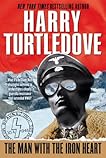 The Man with the Iron Heart by Harry Turtledove
My rating: 2 of 5 stars
From Goodreads:
"What if V-E Day didn’t end World War II in Europe? What if, instead, the Allies had to face a potent, even fanatical, postwar Nazi resistance? Such a movement, based in the fabled Alpine Redoubt, was in fact a real threat, ultimately neutralized by Germany’s flagging resources and squabbling officials. But had SS Obergruppenführer Reinhard Heydrich, the notorious Man with the Iron Heart, not been assassinated in 1942, fate might have taken a different turn. We might likely have seen a German guerrilla war launched against the conquerors, presaging by more than half a century the protracted conflict with an unrelenting enemy that now engulfs the United States and its allies in Iraq. How might today’s clash of troops versus terrorists have played out in 1945?"
This not one of Turtledove's better works.
The initial idea is interesting. Why did Nazi Germany accept Allied occupation when so many other countries have fought long guerrilla wars against occupying forces? How is 1946 Germany different than 1979 Afghanistan or 1960s Vietnam? How is it like the former Confederate States in the 1860s?
These are important and valid questions that I feel were swept under the rug. Instead, the narrative seems strongly linked to the US experience in Iraq circa 2006 (before the Sunni Awakening and troop surge). However, if this book is a veiled commentary on Iraq, then Turtledove missed a perfect opportunity to weigh-in on one of the major debates in policy regarding the War on Terror - namely the use of extralegal force (torture, detention without rights, rendition, etc.). The division of post-war Germany into Western Allied and Soviet zones creates a opportunity to contrast the effectiveness of different tactics in counter-insurgency - between a buy 'em off/win hearts and minds plan used by the Americans and unbridled force used by the Russians. In our own history, these are the tactics that those two regimes did use. Instead, Turtledove shows us that the Soviet NKVD is certainly ruthless, but he never even mentions the Marshall Plan (which, in his defense was discussed but not yet implemented within the time-frame of the book.
Instead of answering deep military/historical questions or addressing the policy and moral arguments of the war he is modeling off of, Turtledove instead gives huge benefits of the doubt to the Nazi partisans. Heydrich's organization is presented as monolithic, with no internal power struggles. While their tactics are often taken from the al-Qaida playbook, Heydrich's men also succeed in multiple truck bombings of national monuments (proposed but only rarely completed by al-Qaida) and a dirty bomb attack. Competence at this level is not seen now and was not seen in 1940s Germany (Just read up on the many attempts to assassinate Adolf Hitler to see just how large the logistical and pure luck challenges of such campaigns can be). The most annoying benefit given to Heydrich though is in the surprising backbone given to Republican opposition to Truman's prosecution of the war in Germany. Although Congress does control the purse-strings, and progressives did argue strongly for cutting-off funding for the Iraq War after the 2006 mid-term elections, a successful recall of troops from an overseas war due to Congressional budget-writing never saw a chance of happening. In Turtledove's world it sailed through entirely too easily.
In all, I feel like this book was forced. Ideas were not well thought-out and our heroes were hamstrung by an author who failed to properly research their options.
View all my reviews >>
Labels: Germany, Guerillas, Iraq, National Redoubt, NKVD, Partisans, Review
posted by Christopher at 00:44
1 comments


